In a city council budget focused on keeping rates the lowest in the south-east and making green bins a universal service, three highlights stood out in the 2025-2026 Brisbane City Council Budget: investment in Story Bridge rectification, Brisbane Metro expansion, and beautifying the city ahead of the Brisbane 2032 Olympic and Paralympic Games.
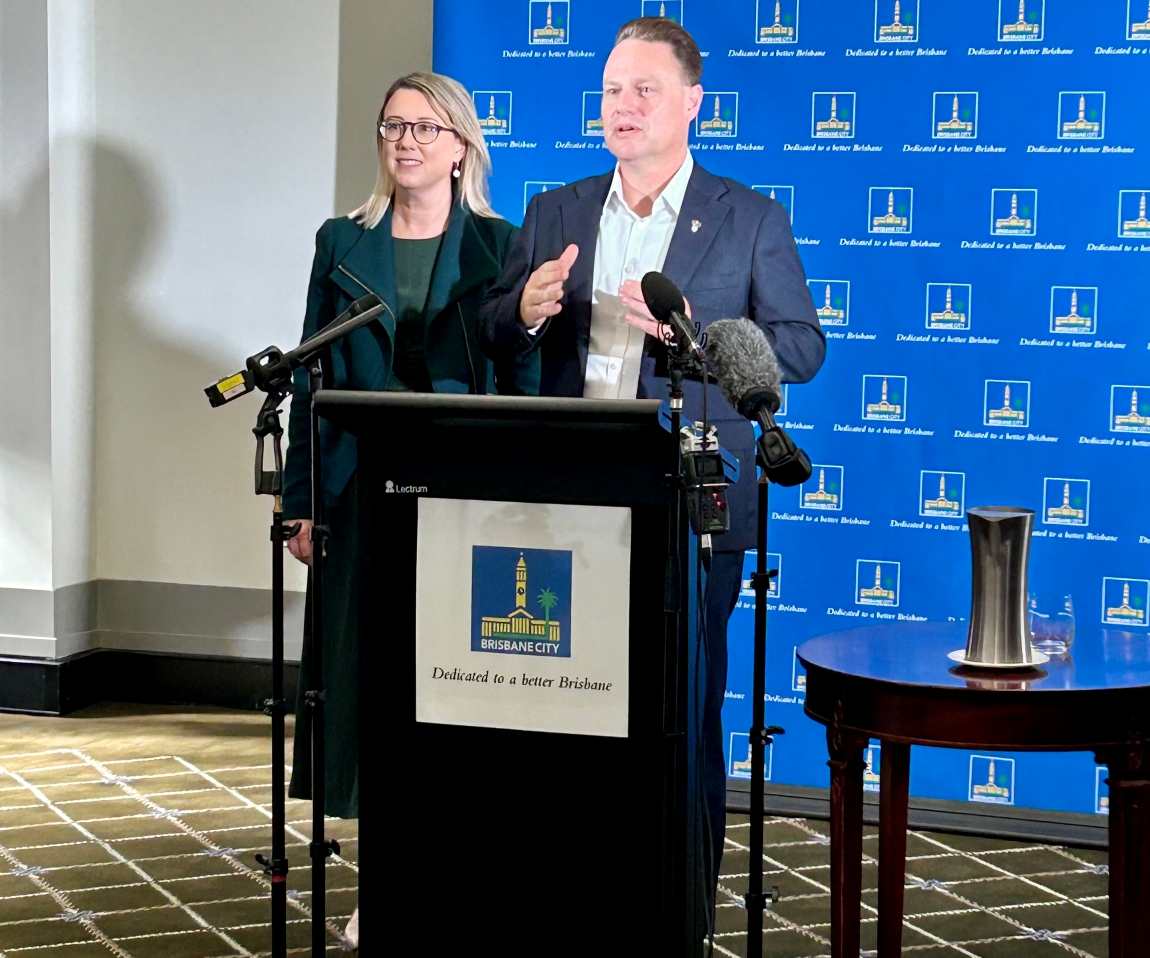
Story Bridge investment will include more than $18 million over the next 12 months with Brisbane Lord Mayor Adrian Schrinner promising he would be asking the federal and state governments for a similar deal to what they have given other local councils for major rectification works needed in the next 15-20 years.
“[In early June] the Prime Minister and Federal Minister for Infrastructure were in Tasmania opening a new bridge,” he said.
Cr Schrinner said the Tasmanian bridge was of a similar age to Brisbane’s Story Bridge and it was 80% funded by federal government and 20% funded by the state government.
He said Story Bridge was an asset that was part of the wider transport network with 42% of users from outside of Brisbane.
Cr Schrinner laid out plans for Story Bridge in three parts while handing down the budget:
1) New custom-made footpath decking costing $6.9 million
2) Ongoing restoration works costing $6.2 million
3) Business case partnership with the federal government that will see $5 million invested by Brisbane City Council
At least one footpath is expected to be opened before the end of the year after a fast-tracked tender process meant materials were ordered this week. The custom-made decking will take 17 weeks to manufacture and then night works will be utilised to install the decking and minimise traffic disruption.
The scheduled ongoing restoration works are part of a five-year program of works that started in 2023 and includes concrete rehabilitation, repairs to gantry rail connections, bridge railing and stiffening plates and improvements to the bridge’s thematic lighting. Since 2019, council has spent nearly $80 million in previous restoration and maintenance works.
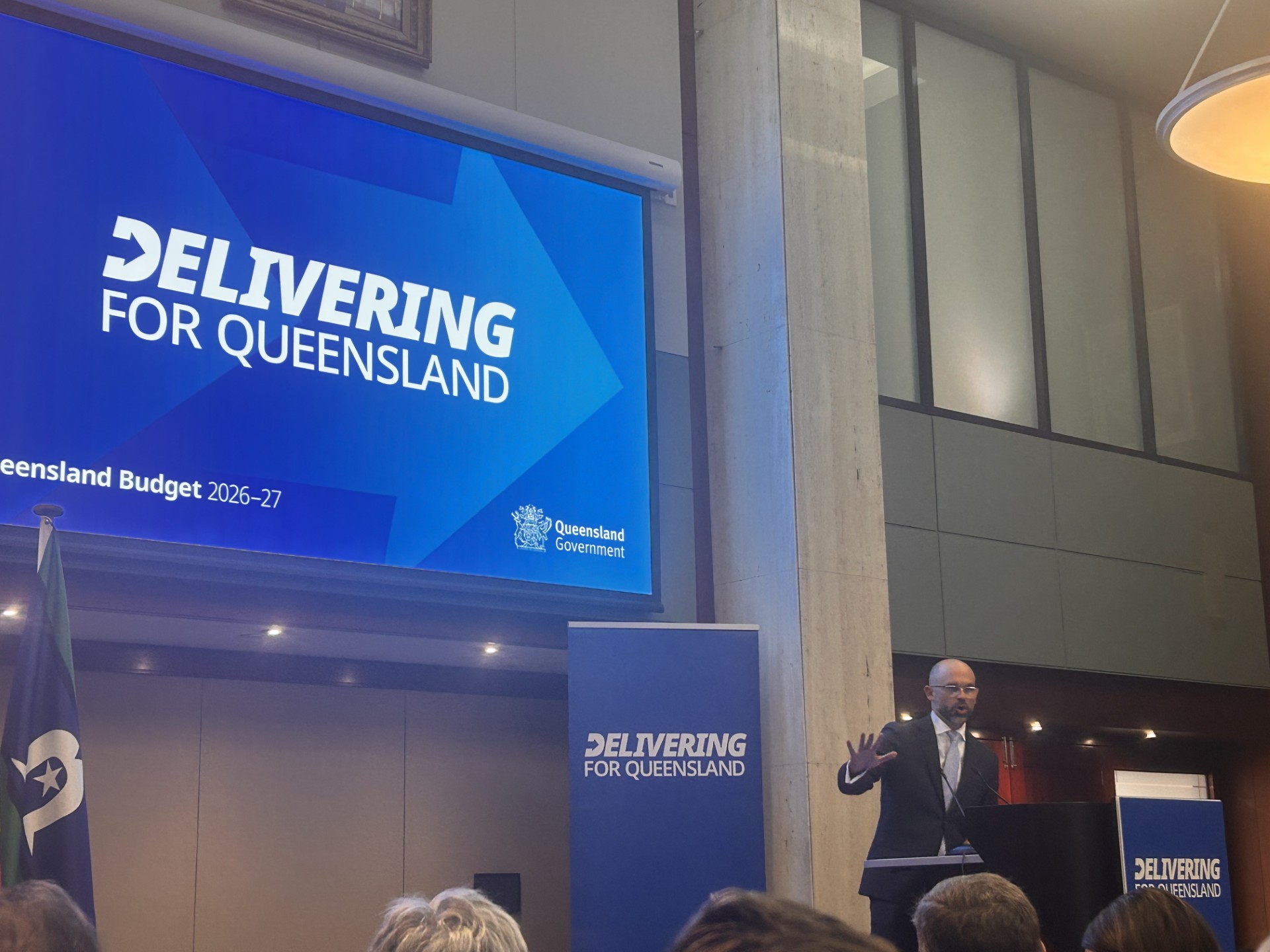
With a total budget of $4.1 billion, the council outlined the external costs pressures impacting council. Felt across the sector, the council is not immune from these impacts including a 40% increase in concrete, cement and sand costs and 18% increase in building construction. Cr Schrinner also lamented the reduced investment from federal and state governments making it harder for Brisbane City Council being lumped with responsibilities beyond the three R’s of local government: roads, rates, and rubbish.
Despite this, Cr Schrinner took delight in adding an extra r to this year’s budget: rapid transit.
“This is something no other local government has been able to do,” he told council in his Budget Speech.
He outlined this year’s budget would entail the biggest boost to buses in the city in a decade and planning the next stage of rapid transit under a banner of “Keep Brisbane Moving”.
He said 1.5 million people had already ridden the Metro with only part of the system live (Metro 2). The Metro 1 services to Eight Mile Plains is due to open within the week, first offering five-minute frequencies and then three-minute frequencies once Adelaide Street Tunnel is opened.
Building on the delivery of Metro 1 and 2 and Brisbane’s new Bus Network, he outlined the following initiatives:
- $50 million for the Brisbane Metro expansion business case: north to Carseldine, south to Springwood, east to Capalaba and the Brisbane Airport Metro
- $210 million into subsiding public transport
- Completing the Adelaide Street Tunnel, which will reportedly remove 1390 buses a day from the surface streets in the CBD
- Road network renewal projects including resurfacing Ipswich Road, Rocklea and Annerley, Toombul Road, Northgate, Vulture Street, Woolloongabba and Waterworks Road, The Gap
- $6.2 million for Safer Schools precincts
- $2.7 million for Fortitude Valley blackspot projects
- Suburban intersection upgrades including in Chermside, Toowong and Tarragindi
- Expanding the Clearway Action Plan to: Lutwyche Road and Bowen Bridge Road, Abbotsford Road and Wynnum Road
- $4.4 million for Smarter Suburban Corridors – a 4-year project aimed at improving the existing road network using smart technology.
With the Brisbane 2032 Olympic and Paralympic Games looming, Cr Schrinner said this year’s budget included plans for city beautification centred around Games venues.
“Now is the time to plan what Brisbane will look like,” he told council in his Budget Speech.
“We want the world to discover Brisbane and fall in love with its lifestyle and natural attractions.
One of the jewels in the crown is Mount Coot-tha, but it can be even better by 2032 and beyond.”
A range of eco-tourism destinations and attractions will be investigated under a new master plan for the area ahead of the Olympics with a long-term plan also planned for Mount Coot-tha Quarry. The master plan will be delivered by Brisbane Sustainability Agency, chaired by Nigel Chamier AM.
Opportunities will reportedly include improving Mount Coot-tha lookout, a new night-time light show, revitalising the Planetarium and Tropical Dome, tree planting, wilderness trail, glamping, tree-top walk as well as reconfiguring Sir Samuel Griffith Drive to a one-way loop road, reserving a lane for cyclists.
For Brisbane residents, the key takeaways from the budget included recategorising inner city units to bring council rates in line with outer suburb dwellings and rolling out a universal green bin service to all eligible residents who do not opt-out of the service.